In February, I blogged a number of times about Susan Neiman's book Learning from the Germans: Race and the Memory of Evil (Farrar, Straus & Giroux, 2019). As I told you in one of those postings, one reason Neiman's important book caught my attention and made me decide to read it is that Susan Neiman grew up in the American South during the Civil Rights era, as I did. Neiman is, however, Jewish, and she saw the struggles for African-American rights in Atlanta through the lens of her own marginalization as a Jew, an experience I did not have growing up as a white Anglo Southerner descended from slaveholding ancestors.
Showing posts with label Susan Neiman. Show all posts
Saturday, May 9, 2020
Wednesday, February 26, 2020
Quote for Day: "People Voted for Hitler as They Voted for Putin and Trump, Because They Didn't Want to Give up Their Own Privileges"
![]() |
| PRRI, "Despite Chaos and Controversy, Trump Favorability Stable Throughout 2019," 26 Feb. 2020 |
In her book Learning from the Germans: Race and the Memory of Evil (Farrar, Straus & Giroux, 2019), Susan Neiman cites German philosopher Bettina Stangneth, author of Eichmann Before Jerusalem (NY: Knopf, 2014; German edition, 2011):
Labels:
Bettina Stangneth,
Donald Trump,
Hitler,
Nazis,
Susan Neiman,
white privilege
Tuesday, February 18, 2020
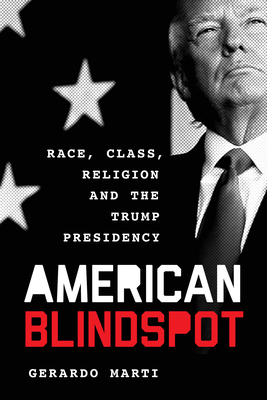
Notes on Gerardo Marti's American Blindspot: Race, Class, Religion, and the Trump Presidency
I recently read Gerardo Marti's American Blindspot: Race, Class, Religion, and the Trump Presidency (London: Rowman & Littlefield, 2020), and would like to share some thoughts about that book with you. A key insight of Marti's book is that, in looking at Donald Trump, we Americans are looking in a mirror and seeing our own faces. It is not, as many in the media have wanted to imagine, a fluke that he seized the White House in 2016, riding significant backlash against the nation's first African-American president to do so. This outcome is consistent with ugly currents long present in American history — from the outset of the nation, in fact — that many Americans appear determined not to see.
Subscribe to:
Posts (Atom)