American Psychiatric Association, "APA Reiterates Strong Opposition to Conversion Therapy":
Showing posts with label construction of masculinity. Show all posts
Showing posts with label construction of masculinity. Show all posts
Monday, November 19, 2018
Thursday, September 27, 2018
More Kavanaugh Hearing Tweets: "Why Are All These Men So Angry?" & "If You Can't Imagine What Toxic, Fragile Masculinity Looks Like, Turn on Your Television"
Why are all these men so angry?— Sarah Posner (@sarahposner) September 27, 2018
Kavanaugh Hearing and Catholic Abuse: Overlapping Narratives — Same Catholics Who Support Viganò's Allegations Dismiss Kavanaugh's Accusers
Today I'm thinking of how many students, over the course of my teaching career, have recoiled, outraged at the thought that a woman's testimony had historically and biblically been deemed unreliable unless corroborated by a man's.— Natalia Imperatori (@nimperatori) September 27, 2018
Tuesday, September 25, 2018
More on the Jesuit Elite Boys' Club from Which Kavanaugh and Judge Emerged: Need to Rethink Jesuit Claims re: Inculcating Healthy Masculinity in Students?
1) There is a serious problem in American Catholic conversations that is glaringly obvious in the discussion of Brett Kavanaugh, Mark Judge, and their "man for others" Jesuit education at Georgetown Prep.— 𝚆𝚒𝚕𝚕𝚒𝚊𝚖 𝙳. 𝙻𝚒𝚗𝚍𝚜𝚎𝚢 (@wdlindsy) September 25, 2018
Emily Witt on the (Jesuit Elite) Boys' Club That Protects Kavanaugh: Need to Rethink Jesuit Claims re: Inculcating Healthy Masculinity in Students?
 |
| Mark Judge's Page, Georgetown Prep Yearbook The Cupola, 1983 |
Read the following statement by Emily Witt side by side with my posting yesterday, which suggested that there may be something more than a little flawed about the magical-mystical approach to militaristic masculinity — "We're men for others, a band of brothers!" — fostered by all-male Jesuit prep schools, which have long been breeding grounds for elite males who will step from their educational years into prestigious jobs tailor-made for men like themselves by other men like themselves.
Saturday, July 25, 2015
Men (American Ones) and Their Guns: Two Takes on Lafayette Shooting

Hot off the press this morning, two noteworthy observations about the shooting in Lafayette, Louisiana, on Thursday:
Friday, July 24, 2015
Frightening Picture Emerging of Yesterday's Shooter, John Russell Houser: "Westboro Baptist Church May Be the Last Real Church in America"
The Westboro Baptist Church may be the last real church in America[members not brainwashed].
— john russell houser (@jrustyhouser) June 5, 2013
Skyrocketing Incidence of Mass Shootings in U.S.: Link to "Aggrieved Entitlement" of Males Who Feel Masculinity Is Under Siege

In an online essay published yesterday at the Society Pages site, Tristan Bridges and Tara Leigh Tober ask why it's men who commit the mass shootings in the United States. Here's Fred Clark commenting on the essay:
Tuesday, June 10, 2014
Testosterone, Castration, the American Political Right: A Consideration of the Narrative

When I expressed my impatience recently with theories that ground male misbehavior in nature (specifically, in testosterone), Colleen Baker responded with the following illuminating anecdote:
Saturday, June 7, 2014
"There's Doctor Em," Steve Says, and the Giftie Holds a Looking Glass Up to My Face: More on Gender Roles and Construction of Masculinity

"O wad some Pow'r the giftie gie us /
To see oursels as ithers see us!" Robbie Burns wrote. Here's the shiny, shaming looking glass the ever-active little giftie who skips tauntingly along the corridors of my own life decided to hold up in front of me today:
Andrew Sullivan, Et Al., on Testosterone, Tradition, and Natural Law in the Construction of Masculinity: A Rejoinder

Andrew Sullivan says that he (along with Ross Douthat) is "kinda tired of" arguments like Fredrik DeBoer's recent assertion that the "association of male value with aggression, dominance, and power is one of the most destructive forces in the world, and so it has to be destroyed."
Thursday, June 23, 2011
Tyree Keeps Spouting Off: "Don't Want My Kids to Think Homosexuals Are Normal"
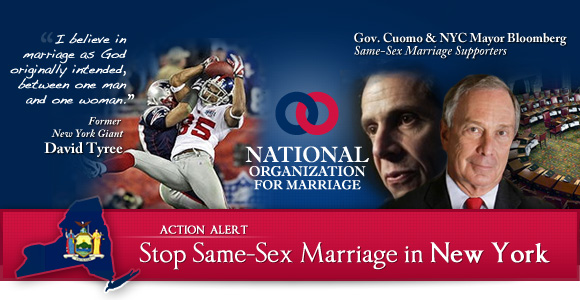
And so now we hear from Mr. Tyree re: what it's really all about for him, when he calls same-sex couples "unnatural and spouts off about what his bible says: it's about the children, for God's sake! It's about that old canard to which NOM and other anti-gay hate groups inevitably return, when they gather than people's appetite for gay bashing is waning: it's about the old insinuations that "unnatural" gays are out to molest and recruit my children.
Sunday, January 16, 2011
Traditional American Gun Cultures and Today's Gun Culture: Worlds Apart

I grew up in the gun culture. I reckon.
Mitchell Bard points out, rightly, that guns mean different things to different sets of Americans, depending on the historical circumstances that have shaped our regional cultures. And as I think about it, I realize that I grew up with guns somewhere in my family's house, but when I try to think of precisely where those guns were stored, or of any active role they played in our family life, I draw a total blank.
Saturday, September 11, 2010
Tracy Clark-Flory on Gender Issues: Catholic Right Continues to Attack Contraception, "Mad Men" and the Latest "Menaissance"

Finally today, a great round-up of recent news clips about discussions of gender issues, by Tracy Clark-Flory at Salon. I’m especially intrigued by the article to which Clark-Flory links at Catholic.net, discussing whether a marriage consummated by partners (one sacramentally married male and one sacramentally married female, bien entendu) using artificial contraception is valid. Is even consummated at all.
Friday, August 6, 2010
Masculinity in Crisis: A Recurring Meme at Times of Cultural Stress

Another link to a recent posting: I blogged recently about the wide appeal of the show “Mad Men,” and my suspicion that we’re watching this popular series not because it exposes the pitfalls of the socially constructed definition of masculinity of the late modern period, as many of us claim. We’re watching precisely because we want to reassure ourselves that a masculinity we imagine to be under siege in postmodernity remains continuous with the hyper-maleness of modernity at its peak.
And so I’m interested to watch Brian Safi’s recent infoMania send-up of the accentuated machismo of recent commercials: Masculinity is in crisis! Let’s bring back the real man in this era of economic downturn and a black man in the White House!
And so I’m interested to watch Brian Safi’s recent infoMania send-up of the accentuated machismo of recent commercials: Masculinity is in crisis! Let’s bring back the real man in this era of economic downturn and a black man in the White House!


Saturday, July 31, 2010
"Mad Men" and the Renegotiation of Masculinity in the Late 20th Century: A Dissenting Perspective

Steve and I watched the first episode of “Mad Men”’s new season last night, and it hit me: the reason this superbly scripted, superbly staged series attracts intense interest is not, as many folks want to argue, that it shows us so meticulously how contemporary definitions of American masculinity differ from those of post-war America. We’re watching “Mad Men” for another reason altogether: we’re seeking reassurance that, in spite of the hits that the definition of the male sustained in the final decades of the 20th century, things haven’t substantially changed.
Men remain men. And all remains right with the world as a result.
Friday, May 14, 2010
Ramin Setoodeh on Girly Men: Newsweek as Gatekeeper of the Masculine (and Other Sacred Institutions)

The controversy following journalist Ramin Setoodeh’s recent Newsweek essay suggesting that straight actors can play gay while gays can’t play straight is fascinating. I find it interesting from two standpoints.
First, it illustrates how mainstream the discussion of gay issues has now become. Debates that used to occur behind the walls of the “alternative” media are now taking place in the mainstream media and online, where bloggers correct and heckle the media constantly. And that seems good, both for the gay community and the culture at large.
First, it illustrates how mainstream the discussion of gay issues has now become. Debates that used to occur behind the walls of the “alternative” media are now taking place in the mainstream media and online, where bloggers correct and heckle the media constantly. And that seems good, both for the gay community and the culture at large.
Wednesday, August 19, 2009
"Mad Men" and Real Men: Sliding Back to the Future?
 In my review of the movie “Julie and Julia” two days ago, I noted that the parallel that film draws between a world of the past (the world of Julia and Paul Child) and the world of the present strikes me as not merely descriptive but prescriptive. I stated:
This is a movie about a world of the past that connects to the world of the present as a model, as a script for how it should be done. And the perhaps understandable (if inexcusable) invisibilization of gays in that world of the past is continued in the script for the present. As though it should be that way.
Because I think the past is commonly used that way—historical studies prescribe to the present even as they describe the past—I’m fascinated by the current infatuation of many of us (and I’m in the number) with the AMC series “Mad Men.” Since we don’t get that channel, Steve and I caught up with the last season only recently; we rented it and watched it through in two marathon evenings, because it captures our imagination, in part, because we came of age in those years.
Some of the commentary I’m reading about “Mad Men” online appears to confirm my insight about how we read the past as a model for the present. And some of that commentary deals with precisely the issues I raised in my comments on “Julie and Julia”—the current allure of some of the gender stereotypes of the past.
I was intrigued to read a posting by Peter Suderman about this at Andrew Sullivan’s Daily Dish blog Monday. Suderman links to and comments on a posting of Katie Baker the same day at Newsweek’s Pop Vox blog.
Katie Baker confesses that many women in their 20s and 30s have a guilty crush on the main character Don Draper, played by Jon Hamm. What excites their imagination, Baker thinks, is Draper’s retrieval of a manly-man image that seems to be under assault in our culture after several decades of feminist breakthroughs:
A man's man. A virile man. A masculine man. Strong terms. And ones that would make our postmodern gender-studies professors blush . . . . And maybe that's why we feel a little guilty when we stop to admit to ourselves why Draper excites us. Because we're not supposed to be using those terms anymore to describe our desires. Those words threaten a backsliding—they hint at some deep, unspoken turbulence; that, as if by saying we want a "real man," we threaten to erase all the gains our mothers made in terms of equality in the workplace and the home.
And that’s just what I was talking about in my comments on “Julie and Julia.” I detect a trend in some of the mid-century (the 20th, that is) period pieces we’re now being offered to rehabilitate gender stereotypes that, for justifiable reasons, we began to discard as the century went on, and which have proven toxic for both genders. And along with that rehabilitation, of course, there’s sometimes an unexamined rehabilitation of an unsavory aspect of the world in which those manly men of the mid-20th century ruled the roost: it included no gay men—at least not any open gay men.
I’m not suggesting that Katie Baker or everyone who finds “Mad Men’s” depiction of Don Draper tantalizing wants to bring back a world in which gays were closeted. What I am suggesting is that it’s possible to allow ourselves to be allured by depictions of the past that implicitly (or sometimes explicitly) reinforce stereotypes and exclusions we’ve rightly begun to question. And when we don't reflect on how we're being pulled into that world of the past as a model for the present, and what it means to continue injustices and exclusions of the past in the present, we're in trouble.
It continues to bother me that “Julie and Julia” kept the gays in the closet. “Mad Men,” by contrast, is doing an outstanding job of showing what it was like to be gay in America in the 1950s and 1960s, with the complex, well-scripted character Salvatore Romano, played by Bryan Batt. As Heidi Schlumpf notes at National Catholic Reporter, one of the appeals of this series is the way it scrutinizes—with a cold eye and considerable care—gender and justice issues that continue to trouble our society, even as we look back nostalgically on the “golden” period of the mid-20th century.
And as Peter Suderman acutely observes in response to Katie Baker, what really seems to attract some of us to Don Draper is not the really even the reality men of mid-century actually lived, behind the man’s man façade: it’s the façade itself. Draper is “a fictionalized, idealized fantasy of an iconic form of masculinity” who just happens to be a “cheating, borderline alcoholic sexist.”
The good old days may not really have been so good, after all—even for those who lived at the top of the world then. Sal’s painful struggle to come to terms with being gay and his decision to marry constitute a revelatory sub-script to which anyone nostalgic for the fifties and sixties needs to play close attention.
But perhaps even more, any of us who hanker for the return of virile men and for all the accoutrements that propped up a man’s man in the halcyon days of mid-century, need to think about just what that masculine gender role entailed. Not just for the gay men on whom they often stepped to demonstrate their unchecked power, or the women they so freely used and then discarded. But for the real men who lived inside those Madison Avenue suits, and who may be far more ambiguous symbols of masculinity we now imagine them to have been, through the distorting lens of nostalgia.
Friday, January 23, 2009
Gene Robinson Through Catholic Eyes: All about Precious Style
 I don’t know America magazine’s political blogger Michael Sean Winters from Adam. I’m far removed from the circles of the power bloggers and power journalists who determine the American Catholic political and cultural conversation—who do so, at least, within the power centers of the American Catholic church.
I know only tidbits of Winters’ biography, insofar as he drops those in postings I have read. If I have read correctly, he has lived in Little Rock and had gay neighbors here. I know, of course, that he has written a book about the relationship between the American left and American Catholics which sees the two as generally at odds due to an inability of the left in its most ideologically rigid manifestations to listen appreciatively to Catholic insights.
I have not read that book, but when I read excerpts from it and reviews of it, I hear a critique that has been around quite a while in Catholic circles, a disdainful critique of the insularity of American leftist intellectuals, along with a barely suppressed glorification of the hard-nosed wisdom of the ethnic working folks lefties purport to represent, but whom the Catholic church represents much more effectively. Of the hard-nosed wisdom of the men of the ethnic enclaves from which American Catholic institutions spring.
As an openly gay Catholic, I have always engaged that critique somewhat cautiously, because I have found that it can harbor no small amount of homophobia, as it relegates gay concerns to the “precious” side of its ledger of cultural critique. I have found that the implicit glorification of the hard-nosed wisdom of workers can also glorify a machismo that is inherently homophobic. It interests me to see that many of the big-name Catholic power commentators of both right and left, who are at war with each other regarding all kinds of other issues, easily find common cause when it comes to this critique of the gay agenda as precious.
I have appreciated Michael Sean Winters’ defense of Douglas Kmiec, who, in my view, promises to open a significant new path for American Catholics in our approach to the public sphere—a path to dialogical involvement with the public square that promises to be far more productive than the conflictual, top-down, haranguing approach we’ve employed for the last several decades. I do have issues with Kmiec’s view on gay rights—as I do with Winters’ views—though I believe that Catholics who want a new approach to the public square can work to find common ground even when we differ on particulars as we engage cultural issues.
I have also found Winters’ reflections on the injustice of Rome’s witch-hunt for gay seminarians to be right on target (www.slate.com/id/2127026). Winters is, in my view, exactly right in his contention that the bishops who have promoted and hidden clerics who have abused minors are the problem, and not gay seminarians. I learn from this piece another biographical detail about Winters: that he was once a seminarian.
I have to part company, however, with Michael Sean Winters’ in his recent reflections on Bishop Gene Robinson and his contribution to Obama’s inauguration (http://americamagazine.org/blog/entry.cfm?blog_id=2&id=FF216671-1438-5036-4FC769C0861B3516). In my view, these reflections enshrine a strong subtext of homophobia that runs through much that the movers and shakers of American Catholic political discourse say about and to the gay community. There’s a dismissive, scornful, totally unwelcoming little text running through much that Winters and his colleagues write about gay human beings.
And since I am a human being, and one who happens to be gay, I take that little subtext rather personally, as if it's written about me. That subtext serves as a reminder to me of why I have distanced myself—rather, why I have finally shrugged my shoulders and accepted the distance imposed on me by those at the center—from the Catholic church.
To put the point bluntly, the American Catholic church has made a preferential option for men. For men who can at least pretend to be heterosexual if they are not. For machismo. For a particular kind of masculinity, a particular way of being a man, one that imagines itself as the direct heir of the tough, brawling, plain-speaking, hard-drinking manhood of our ethnic forefathers. For a homophobic construction of manhood that demeans gay men and taunts them for being precious, shallow sissies.
Here’s what Winters has to say about Gene Robinson in his recent posting re: the inauguration:
When Bishop Gene Robinson told the New York Times that he was "horrified" that earlier inaugural prayers had been so "specifically and aggressively Christian" you knew his own inaugural contribution would be precious. And precious it was. The Rt. Rev. of New Hampshire managed to misunderstand the historical resonance of the word "tolerance" describing it as "mere tolerance." He commended the "reconciling style" of Abraham Lincoln, as if Lincoln’s style mattered more than, say, his perseverance in prosecuting a horrible, harsh yet necessary war. And Robinson wished the new President to bathe everlastingly in victimhood ("Help him remember his own oppression as a minority, drawing on that experience of discrimination, that he might seek to change the lives of those who are still its victims") even though one of the most remarkable qualities of Mr. Obama’s candidacy was his repudiation of such victimhood.
But, what was most disturbing about Bishop Robinson’s prayer was the image of God he portrayed in his effort to avoid being aggressively Christian. The prayer suggests that instead of the God of Abraham, Isaac and Jacob, whom some of us have come to know as the Father of our Lord Jesus Christ, Bishop Robinson prays to a God who bears a remarkable resemblance to a therapist.
Bishop Robinson has become a household name because he is the first openly gay Episcopalian bishop, but that is not my concern: I can’t get over the fact that Anglicans have married bishops in the first place! The real reason to be suspicious of Robinson is that his inaugural prayer was a walking caricature of a lefty theology that perceives the potential for giving offense so comprehensively that the concern for political correctness, normally a canard of the right, actually trumps all else and we are left with a theology that is merely anodyne. I found Robinson’s prayer myopic in the extreme and remain convinced that this man has very little to say.
Subtext galore. Note how everything is framed by the word “precious.” Now that’s not a word one hears often. It's a word one pulls out for very special occasions, to convey very particular cultural references. It means, of course, in this context, affected, excessively refined, given to posturing and preening.
Can anyone say moues? Angry little shakes of the head? Pouting and stamping of tiny feet? There’s a whole world of affective associations that hang on the use of that word “precious” here. And they’re all deeply homophobic. They all reduce Gene Robinson to a figure of ridicule not to be taken too seriously—someone good at acting, but not so skilled at the kind of substantive discourse in which real men engage. Someone very like Gerard Manley Hopkins, whose stay in a Jesuit community in Ireland was turned into torment, some biographers report, by Jesuit confreres who mocked his "ladylike" ways, his fondness for soft slippers, his penchant for moony poetry rather than manlier pursuits.
Lest we fail to get the point, we’re quickly told that Bishop Robinson inappropriately zeroed in on Lincoln’s style, rather than his substance, in his inaugural comments. All style, no substance: show the gays a bright glittering miter and a drab little black breviary, and they’ll grab the miter every time. Because style is what they do, don’t you know. Theater. Prancing and preening on the stage. Where they can act precious to their hearts’ content.
When, instead, they ought to be focusing on the God of Abraham, Isaac, and Jacob, the Father God we’ve come to know through Jesus Christ—that is, they should be focusing on that Father God when they're assigned to the theater of liturgical enactment as Robinson is. They should be focusing on the male God who is almighty and sovereign, Winters tells us, as he contrasts Rick Warren’s more appropriately Christian (and manly?) prayer to Bishop Robinson’s precious stylistic one bathed in victimhood. Because, as we all know, the gays do victimhood, too, along with the pouting and the moues and the stomping of their little feet. It’s part of the act, of the grand, precious theater of style without substance.
(Unfortunately—and as an aside that’s not really an aside at all—non-paternalistic images of God get short shrift in Winters’ analysis of what constitutes proper, non-stylistic, substantial prayer. Though Jesus spoke of his concern to hug Jerusalem to his heart like a mother bird sheltering her chicks under her wing, the God Jesus taught us to focus on is, we’re told in no uncertain terms by Winter, Father—the God to whom Abraham, Isaac, and Jacob prayed. Miriam, Ruth, Naomi, Judith, Sarah, Rachel, Mary have all apparently vanished from this text whose subtext we’re reading.)
And here’s the difficulty with subtext: it works because it functions at the powerful subliminal level of wink-nudge, of insinuation rather than direct statement. It works its potent magic because it reassures readers already in the know, those who share the world of associations and assumptions enfolded into the subtest, that what they they already take for granted is reinforced in the text's insinuations. Subtexts consolidate the meaning of a text in a way that privileges the perspectives of a group of insiders, who—so the subtext reassures them—will remain in control of the text and its world of meaning, and in control of the meaning the text makes for the public.
There is something inherently exclusive about any subtext. It excludes from its world of discourse anyone who does not possess the key to unlock the meaning of the text—that is, the meaning for those who count. For those who are already inside the circle of power, those to whom the text is really speaking and for whom it is really written.
The nasty subtext that turns gay men into shallow preening peacocks—precious actors all about style rather than substance, about the soft therapeutic (female/feminized) God of the left and not the almighty sovereign Father God of true believers—this subtext absolutely dominates the approach of many American Catholic political and cultural commentators to the gay community. It is a toxic, excluding subtext that reads out of consideration—from the start—the contributions of gay people and gay thinkers (especially of gay men) to religious, political, and cultural life.
Except, of course, insofar as those gay men conform to the stereotypes imposed on us, and allow ourselves to ornament the margins, to prance amusingly on the periphery of the stage while the important actors—real men with women and women with real men—occupy the center. Except insofar as we remain happily ghettoized inside the stylistic disciplines decreed for us by men with power: hair-dressing, designing, singing, and so forth. Or except (and perhaps best of all), we pretend to be who we are not, learn to butch it up, knock back a few rounds of scotch with the big boys, and develop the cojones to talk over a few cigars about what matters to real men—sovereignty, substance, almighty things that interest almighty men who pray to almighty God.
This dominant subtext that is well-nigh determinative of the attitude of key American Catholic intellectuals of both the left and the right towards gay human beings really, really needs to go. It continues to assure that the Catholic church is anything but a welcoming and safe space for gay human beings. It justifies what cannot be justified by believers in Jesus or by Catholics: cruel exclusion, mocking stereotypes, dehumanizing treatment of people who are as human as those doing the dehumanization.
Churches forfeit the right to speak of all-inclusive love, of welcome that turns no one away—of catholic commitments and catholic beliefs—when they continue to harbor unwelcome at their very heart. And when they actively defend those who produce subtexts of demonization, while silencing those who call for open dialogue about those subtexts and their effects.
Tuesday, October 21, 2008
On the Failure of Repetition as a Political Stategy: Need for Creative Paradigms
 Fascinating commentary these days on the feebleness of the tried and true strategy that has consistently worked for neoconservatives for some time now. This is the strategy of repeating rather than convincing, of restating rather than engaging in dialogue, of parroting instead of engaging minds.
As a blogger responding to my recent open letter to the U.S. Catholic bishops says, “This repetitious imprinting of an 'obvious reality' is symptomatic of the entire program of Conservative campaigning” (http://ncrcafe.org/node/2172; the blogger’s username is WOJO). Repetitious imprinting of an “obvious reality” as political strategy: saying something over again often enough to make it appear obvious, as if it is a reading rather than an interpretation of reality . . . .
Note that this approach has nothing to do with rational argumentation or with thought. It’s about convincing people by coercing them. It’s about framing social reality such that we make others see what we want them to see through sheer repetition of symbols until the repetition appears to be mirroring what is out there rather than imposing an interpretive scheme on it.
We make people begin to “see” that all poverty originates in the lazy venality of the “welfare queen” who rips off the system. We force people to begin noticing that all theft involves menacing black men wearing do-rags. Through repetition masquerading as reading of “obvious reality,” we impose blinders that deprive people of the ability to see that the vast majority of those ripping off the system work in white-collar venues (e.g., on Wall Street) and that those appropriating our earnings in underhanded ways normally wear top-end business suits.
Fortunately, political dialogue as the repetitious imprinting of an “obvious reality” is simply not working in this election cycle—not nearly so well as it has done for several decades now. In Sunday’s New York Times, Paul Krugman analyzes what is happening as a failed marketing plan (“The Real Plumbers of Ohio,” www.nytimes.com/2008/10/20/opinion/20krugman.html).
Krugman notes that Nixon invented a marketing strategy that has carried the day for neoconservative politicians up to this election. Nixon discovered that neocons could mask their plutocratic economic and social platform through a politics of distraction and division that channeled the resentment of angry white males fearful of change. By bombarding us with repeated symbols of those we are to resent, by shouting hate rhetoric at top volume on Fox news or right-wing talk radio programs until it pours out of our ears, neoconservative spokespersons have adroitly convinced us that they have our “real” needs at heart, even as those real needs go singularly unaddressed and, in fact, become more pronounced under neoconservative administrations.
In this election, increasing numbers of us have stopped listening. Unfortunately, however, “John McCain’s strategy, in this final stretch, is based on the belief that the old formula still has life in it.” Repetition of the slogans of distraction and division has become so ingrained in the political movement that rose to power through this marketing strategy, that it is now well-nigh impossible to stop the repetition—even when it is failing.
In an article in today’s Huffington Post, Arianna Huffington characterizes this failed strategy of repetition as an ““antediluvian approach” (“The Internet and the Death of Rovian Politics,” www.huffingtonpost.com/arianna-huffington/the-internet-and-the-deat_b_136400.html).
As with Krugman, Huffington notes the reliance of the McCain team on repetition of the failed marketing slogans: “And it seems that the worse McCain is doing in the polls, the more his team is relying on the same gutter tactics.”
In Huffington’s view, what has changed in this election cycle is our access to information that breaks the back of the misinformation fed to us in repeated hate slogans. As Huffington notes,
Thanks to YouTube -- and blogging and instant fact-checking and viral emails -- it is getting harder and harder to get away with repeating brazen lies without paying a price, or to run under-the-radar smear campaigns without being exposed. . . .
Back in the Dark Ages of 2004, when YouTube (and HuffPost, for that matter) didn't exist, a campaign could tell a brazen lie, and the media might call them on it. But if they kept repeating the lie again and again and again, the media would eventually let it go (see the Swiftboating of John Kerry). Traditional media like moving on to the next shiny thing. But bloggers love revisiting a story.
The internet—the rise of citizen blogging coupled with tools such as YouTube—has forever changed the way we do business politically in this nation. The strategy of coercion through endless repetition, of framing reality by shouting slogans over and over, can no longer work so well in a technology-driven political world where we can now see the faces, the actual faces, of haters at a political rally. Where can now hear those slogans coming out of the mouths of those faces, and can assess for ourselves, using our own eyes and our own ears, the worth of those hate slogans.
Unfortunately, institutions that have not anticipated these developments are marginalizing themselves in the world coming into being through these new technologies and the political realities they generate. This is among the reasons I have noted that the U.S. Catholic bishops’ continued reliance on simplistic sloganizing (“pro-life,” “baby killers,” “intrinsically evil”) is not merely ineffectual: it is a failed pastoral strategy. This way of doing business no longer conveys the values bishops claimed to want to convey to the faith community and the public at large through these slogans.
In fact, the repetition now does the opposite. It foreshortens thought, ethical analysis, and political responsibility. It draws people together around slogans now contaminated with the toxins of hate, since the same mouths shouting “baby killer” are also shouting “commie faggots” and “kill him.”
Because of my background in higher education, I’m interested as well in the failure of many educators with whom I’ve worked to foresee how quickly information technology would refashion the political playing field in postmodern culture, and how important it was to prepare for that cataclysmic shift, if we want to continue transmitting core civic values to a new generation.
In this regard, Shannon Rupp’s half-satirical, half-serious article “Could We Blame the Financial Crisis on Too Much Testosterone?” on yesterday’s Alternet blog captivates my attention (www.alternet.org/workplace/103502/could_we_blame_the_financial_crisis_on_too_much_testosterone_harvard_researchers_say_yes).
Rupp reports on the Excess Testosterone Effect theory (her phrase) developed recently by Harvard scholars Anna Dreber and Coren Apicella. In an article in the journal Evolution and Human Behavior, Dreber and Apicella report research findings suggesting that men with high testosterone levels take greater risks than those with lower testosterone levels.
Rupp proposes that testosterone-driven risk taking may have served a useful function in the evolutionary process at one time, when social groups required “just enough practitioners of hormone-driven irrational acts to provide us with some regular protein.” Now, not so much.
Now, “male politicians trading on an appearance of strength are actually the guys who, in evolutionary terms, have outlived their usefulness.” Our current economic crisis indicates the downside of testosterone-driven risk taking for the human community as a whole. What we now need more crucially are thinkers, nurturers, people with talents to build teams, harness the energies of groups of people, work collaboratively, generate new ideas for a world on the edge of disaster.
I say that Rupp’s article sparked my thinking about the failed strategies of some educators (who have been under the spell of neoconservative political figures) for a very specific reason. As I have noted in previous postings, one of the astonishing experiences I have had in my academic career was being informed that I lacked the “aggressiveness” to be a successful academic leader.
To be specific: at one of my workplaces, I was repeatedly informed by my supervisor, an African-American female, that I was not “aggressive” enough to be an academic leader. This same supervisor brought in an African-American male to “evaluate” me—a much younger man who had never met me before, who did not know me or my work. A Baptist Sunday School teacher who writes homophobic articles about the social construction of black masculinity . . . .
I mention the racial context because I had naively thought, before running into this web of prejudice and deceit, that many African-American women might share the interest of gay men to critique and overcome the oppression worked in the lives of women, people of color, and gay folks by "aggressive" men. I had naively assumed that African-American women might understand (and so shun) the harm done to the souls of another human being when we employ demeaning phrases like “not aggressive” to control those we supervise.
As I noted in several meetings with this supervisor, “not aggressive” was a code term for “gay” when my supervisor used the phrase. It is a term designed to marginalize, to bash, to demean a person's dignity. The real core of my supervisor's objection to me was clearly that I was a gay male who would not hide my identity.
I put my objection to my supervisor's use of this term into letters that I asked to have placed in my personnel file. As these noted, I objected as well to her “evaluator’s” characterization of me as “not aggressive.” My letters noted that no best-practices manuals for an academic vice-president emphasize aggression as a desirable quality in an academic leader.
In fact, the opposite is the case. Successful academic leaders (those successful in contexts not poisoned by homophobia, as this university was, through its president) deliberately work against aggression and towards collegiality. Successful academic leadership takes place when an academic vice-president gets people working together in a synergistic way that releases the better angels of their nature.
Why bring this up now? Because it’s related to what’s going on in our political life. Those who have invested everything in failed paradigms—models of masculinity centered on males as aggressive risk-takers, for example—are not seeing the pronounced cultural and political needs of this moment of our history. When those who are failing in this way are educators and self-professed transformative leaders in educational life, our future is imperiled.
The old paradigms aren’t working any more. Shouting slogans that divide us has waning power to move us to build a better world. Merely repeating ideas or symbols that once appeared to work but no longer demonstrate effectiveness is not going to solve the problems we face now. They’re real problems, and they’re complex. They require the best energies we can all give them collaboratively.
Subscribe to:
Posts (Atom)