Monday, December 22, 2008

Don't Look Now, But It's Raining Gays: The Pope and the Gay Threat to the Human Rain Forest

And in other news: sometimes in the world of religion, there’s no sublime to preface the fall to the ridiculous.

Various blog and news sites are reporting today on the Pope’s Christmas speech to the Curia today, in which he claims—I kid you not—that gay people represent a threat to the ecology of humanity akin to that posed by exploitation of nature to the rain forests. One of the sharpest summaries of this frankly religious statement that I’ve seen is on the Whispers in the Loggia site, which also deserves attention for its “Ratzingerino: Restore the Rail” posting, with a picture of an eye-popping cappa magna wearing a prelate, and the inscription, “They wrapped the prefect in swaddling cappas and placed him in a throne-chair..." (http://whispersintheloggia.blogspot.com).

Honestly. Gays undermining the ecology of the human rain forest? And cappa magnas ten feet long? To prove, what, that the dignitary sporting the spiffy red cape is even more exalted than he’d be in five feet of red silk? And is therefore more entitled to lambaste the gay threat to all the wonderful fruits of the tropics?

The more Rick Warren’s right-wing Catholic allies have to stretch to ridiculous lengths to make their point that gays are bad, bad, bad for the human race, or that red silk capes are good, good, good for clerical dignity, the more they call into question that central tenet on which the foundations of American democracy rest, if we believe the religious right: open the door to the gays, and Things Will Fall Apart.

Open that door, and who knows what chaos will fly through, swathed in red silk or sporting scarlet slippers. Or beaming across a screen the size of a football field, to parse for us the meaning of the tiny babe born in a manger when all doors slammed to his mother heavy with child, and his father of the shabby workworn clothes.

Sublime or ridiculous: for Christians, the answer to that question depends, I imagine, in large part on whether we really read the holy stories that constitute our scriptures. And which begin with the story of that baby, that mother heavy with child, that father with the workworn clothes, and the doors slammed in their face.

And the doors that open from heaven for those against whom human communities and all their powers and dignitaries and beaming preachers slam fast the door.

The Religious Right and Rick Warren: Time for Debate Is Over

Criticism of the new president’s selection of Pastor Rick Warren to give the invocation at January’s inauguration is waning and the management process setting in. Management as in filing the critiques away under various labels and getting on with the really important business at hand.

In my view, this understandable political-cultural move to stasis tragically evades an important opening for a conversation we have long needed to have in this nation—about the privileged role of the religious right and its corrupting influence on us and our culture. Somehow—or perhaps the obtuseness is deliberate?—the conversation we most need to have now is precisely the one we are not having. And do not intend to have.

But first to the filing away of critiques. I predict that the process of fallout management will use a number of filing labels:

Why can’t we all just get along? This file will bulge. Its label represents the official party line of the new administration, after all—bridge-building, conciliation, bringing everyone to the table (and hoping we just won’t notice that the “inclusive” table lacks gay representation, and that all guests are asked to maintain deferential silence as the voice of Rick Warrens booms forth, overpowering all other voices).

The “just get along” file spins the justifiably anger of most gay and many progressive Americans at the Warren selection as fragmentation: an attack on consensus; a refusal to play with enemies; a giving way to corrosive anger that overlooks the self-control of other marginalized groups, such as African Americans, faced with generations of oppression. This file also often has a religious sub-label—forgive and forget—which, I believe will have ever-increasing force as attempts to marginalize and demonize gay Americans outraged at the Rick Warren selection gain strength.

You think you have it bad? Clear indicators are emerging that not merely the religious right and its powerful political allies intend to play black and gay suffering against each other as the new administration begins. Increasingly, the centrist media are playing the same game, resurrecting, for instance, representations of lynching from the 19th century even as reports flood in of increasing present-day atrocities against LGBT Americans—reports of which there is not a peep in centrist media outlets.

As I have noted repeatedly on this blog, the game of playing the suffering of one oppressed group against that of another is atrocious. Both the suffering of people of color due to their pigmentation and the suffering of gay people due to their sexual orientation are unmerited, horrendous, absolutely unjustifiable. Both forms of suffering are suffering: whether the man cracking one’s skull does so because he loathes one’s color or one’s orientation is beside the point to the person whose skull is being broken. As is the question of whether the pain of the broken skull hurts more if one is black than if one is gay. Or if one belongs to an acceptable as opposed to unacceptable minority group.

In my view, we’d stand the chance of being a much better society if we were informed about all types of avoidable, unmerited suffering imposed by the powerful on the powerless. Media with a conscience, media that care about preserving and fostering democracy, have an obligation to tell the stories of all outrageous assaults on the humanity of all oppressed minorities.

Isn’t it interesting, though, that just as we come to the verge of a fractious national debate about the role of the religious right in our culture and about the illicit playing of black suffering against gay suffering—a debate our managers do not intend for us to have—we rediscover pictures of lynchings, while we remain totally silent about pictures of gay people stabbed, beaten, raped, or with heads bashed in? We remain silent about the atrocities taking place around us right now while shaking our heads at ones in the past.

This is clearly a diversionary tactic, one designed to cast doubt on the claims of gay Americans about discrimination and oppression. It is a tactic designed to shut gay Americans up by playing the unmerited suffering of people of color against the merited suffering of gays. It is a tactic one employed not only by those on the right eager to set two oppressed minority groups against each other. It is a diversionary game also being played by those in the center—to undercut the persuasiveness of gay voices, of gay critiques, of gay witness. Why this need, I wonder?

I want to propose that the need is rooted in a concern by the mainstream to shield evangelical religion from critique—that is, to shield from critique toxic forms of evangelical religion that have mainstreamed themselves in the latter half of the 20th century in the United States, and which seek to continue their hegemony under the new president. The fierce, stolid reaction of a large number of Americans to the critique of Rick Warren’s selection as a specifically gay critique—one the mainstream chooses to see as rooted in pique and illicit claims to victimhood—has everything to do with America’s addiction to evangelical religion. In particular, to the evangelical religion of the right.

The problem many Americans have with the gay critique of Warren’s selection is not due precisely to homophobia, though that’s an aspect of the reaction. The central thrust of the defense of Obama’s choice is to shield the evangelical religion of the religious right from criticism.

We have long been a nation in which evangelical Christianity sees itself—and is widely regarded—as a state religion. What evangelicals choose to bless is blessed. What—or whom—they curse is cursed. Blessed and cursed by the political sphere.

In recent decades, as the focus of American evangelicalism has shifted to the right, the religious right has increasingly represented itself as the official voice of evangelical religion in the life of the nation. Only a minority of Americans actively belong to the religious right. A much larger majority, however, not only defend the views of the religious right, but tacitly endorse those views while remaining distant from the political initiatives of this movement.

The religious right has had tremendous success at mainstreaming itself while maintaining a rhetoric of hate and division in our democratic society. Rick Warren is the growing edge of the mainstreaming process—the kinder and gentler face of right-wing American evangelicalism, if you will. He is, after all, iconic: smiling, avuncular, a bit chunky, goateed—the kind of nice guy we imagine we’d like to have in our living rooms to down a beer with us as we cheer a football team.

Such a face cannot represent evil. Can it? If it does, then we somehow represent evil. And that is not who we are, as a people. We are a nation uniquely blessed by God, led by God, set up by God, charged with a divine mission to be a city on a hill for the rest of the world.

And no one stands closer to the top of that hill than Rick Warren—than the movers and shakers of the religious right. Than their current kinder and gentler representatives who both bash gays in country and assist (heterosexual) Africans with AIDS overseas.

To repudiate Rick Warren and what he stands for is to repudiate ourselves—our foundational myths about what we stand for and who we are. The religious right has adroitly exploited those myths for several decades now and has worked to convince us that any criticism of their movement and its goals is criticism of the religious foundations of our society that will result in social decay. Criticize the Rick Warrens of the land, and you are criticizing the bible. The flag. Religion in general. The family. The traditional family. God.

This is why Mr. Obama has invited Rev. Warren to give the invocation at his inauguration. This is why he has given this particular representative of the religious right the highest possible profile in the inaugural ceremony—the symbolic plum job of calling God’s blessing down on the new administration. From the mountaintop. Where he speaks with God and divines God’s will for the rest of us. The mountaintop he has attained not merely through his own merits, his skill at preaching, the acuity of his theological insight, his excellence at living the gospel.

The mountaintop where he has been placed by very powerful economic and political interest groups who intend for the religious right to continue claiming the title of state religion in the Obama administration. And Mr. Obama is clearly complying with their request, in his choice of Rick Warren as the invoker of blessing on the new administration. Obama clearly believes, along with millions of other evangelical Americans, that the religious right is merely another—and another justifiable—manifestation of the evangelical values of the mainstream.

Who finds this appalling? Though much of the media coverage of the reaction to the Warren selection focuses on the strong reaction in the gay community (and that reaction deserves notice, since no other group of citizens is singled out for hatred in the unique way gays are singled out by the religious right), many other Americans find the choice of Rick Warren for this symbolic role sickening, as well.

Many of us have long since grown weary of the posturing of the religious right—of its empty claims to be the only acceptable incarnation of religious values, and most of all, of its lies. Many of us have come to believe that the time for debating the claims of the religious right—for sitting around the table and making nice with each other, while only one voice is ever permitted to be heard—is over. It is time to repudiate the claims of this movement that misrepresents the gospel and betrays core American values.

Many of us saw the election of Mr. Obama in this light—as a sign that the nation could move on, wake up from its long nightmare, if you will, and dispense with placating the religious right, which has, after all, played a decisive role in getting our nation into the mess it now finds itself in economically, culturally, and in every other sense imaginable. Many of us saw Obama’s election as the dawning not just of a new political era, but of a new religious one as well.

We saw it as the opening to a new consensus beyond the hegemonic claims of the religious right, in which Christians of other religious and political viewpoints might once again have a voice in shaping culture and affecting the political sphere; in which members of the Jewish community not allied with the religious right (and that contingent has been powerful for some time now) might once again speak out of the depths of prophetic faith; in which Muslim Americans might be heard and not demonized and distorted. And in which people of no faith at all or people antithetical to faith, but strongly committed to the core values of our society, might play a vital role.

The selection of Rick Warren signals to us that this is not going to happen. It tells us—all of us, a sizeable group of us—who see the role of religion differently and read the bible differently that we do not truly belong. Rather, it confirms the message we have now been given for lo these many years now: there is one God, and the religious right are His unique spokespersons. There is one religion in this nation with the soul of a church—one civil religion—and the religious right sits in the seat of honor in that religion’s conclaves.

What I think those who now call for conciliation overlook, to the peril of the nation, is that there are issues of values, of human rights, where compromise is impossible. It is obscene to speak of any human being as only partly human, or only partly entitled to human rights. Or as entitled to rights down the road, when we have formed a consensus to view that human being as fully human.

For some of us, these debates are over. It is time not to debate, not to sit around the table being lectured by Rick Warren. It is time to move on. It is time to decide, as a nation, where we stand about the human rights of gay Americans. For those of us who are people of faith, it is time, many of us think, to admit that the theological and political claims of the religious right distort the gospel and falsify religion—that the religious right is neither religious nor right.

It is, in other words, 1860 all over again. Let a majority of Christians in the United States believe, if they will, that the bible justifies slavery. Let those Christians shout that anyone opposing them not only challenges longstanding Christian tradition, but is suppressing their right to their own views.

At some point—and this is what we saw in 1860 vis-à-vis slavery—the nation has to make up its mind about how the bible will be read in the public sphere, about whether this or that reading of the bible impedes or promotes democracy, and move forward. That moment is at hand for us now, when it comes to questions of religion and gay rights.

And because Mr. Obama is asking us to defer the moment once again, to continue a debate that has long since finished for many of us, his administration will begin with an iron boot clamped onto one of the legs it most needs to stand on, if it truly wishes to move forward with its platform of hope.

Sunday, December 21, 2008

Sunday Miscellany

Excellent statement by John Aravosis today on why the Rick Warren controversy can’t be allowed just to go away. Because questions of rights can’t be allowed just to go away.

We didn’t let that happen with the rights of people of color, or of women. Why should we allow it to happen with the rights of gay human beings? Or is it that we regard gay people as less human than other groups of human beings? As “negotiable,” to use John Aravosis’s term:

In bad news, no, the Rick Warren controversy has not run its course. In fact, the more I think about it, the more I hear the non-gay majority in this country give their view on "diversity," the more incensed I get. There aren't two views on civil rights, unless you mean the right view and the wrong view, the moral view and the immoral view. Obama knows the difference. Obama has lectured his own community on the difference. But now that he's seeking to curry political favor with the bigoted evangelicals, suddenly civil rights is just another policy debate with multiple legitimate points of views. Suddenly, when the color changes to gay, civil rights become relative and humanity negotiable. They aren't (www.americablog.com/2008/12/sunday-morning-open-thread.html).

Be sure to notice the picture John Aravosis appends to this statement. It’s part of his argument.

+ + + + +

Speaking of pictures, the one accompanying this posting is that infamous picture taken on my 56th birthday. With Steve and my nephew Patrick. The one that popped up on my work computer mysteriously after it had been taken. (The tuxes were required dress for the faculty banquet that happened to fall on my birthday.) When I realized that the circulation of this picture was a statement that someone with the capability of (or authority for) manipulating the computer network at this workplace wanted to make, I decided to help him or her along.

I emailed the picture to the leadership team of the campus, thanking them for their hospitality to my nephew in the week he visited me and the campus. When people want to smear, lie, and oppress, it often helps to take the very symbols they are using to accomplish those evil goals, and put those symbols right back in their face.

It helps to force them to own the symbols, to acknowledge the evil intent they have in circulating the symbols. It is an act of political defiance to make oppressors “eat” their oppressive symbols. In this case, to call out those trying to use a birthday picture of my nephew, life partner, and me as some indicator of a sexually abusive relationship between an uncle and his nephew—to call them to own the evil that they were doing.

In such situations, the shame is not on the heads of those targeted: it is on the heads of those trying to shame gay people by claiming that to be gay is to be a pedophile. This should not be going on in 21st-century America—especially not at a church-owned university, particularly one serving a community (the African-American community) that has historically known how soul-ravaging such slanderous attempts to stereotype can be.

+ + + + +

It has occurred to me several times this month that, though the anniversary of my father’s death on 13 December in 1969 came and went, I did not make mention of it. As I do make mention of other anniversaries of death in my family . . . .

As I have thought about my reluctance to engage this memory, it occurs to me that there is clearly still need for healing in my relationship to my father—in my relationship to what I remember of my father, that is, since our relationship to those who have died shifts to commemoration after their deaths.

It is a deep wound, to be repudiated by a parent because one is gay. This is a wound that far too many young people have to endure. My prayer as Christmas nears is that fewer of us will inflict such wounds on the generations ahead of us.

This is why it is important to teach, to challenge lies such as the gay = pedophile lie. If nothing else, the malicious ignorance of those who equate being gay with being a pedophile needs to be exposed constantly, to prevent adults who cling to such ignorance from inflicting pain on young people they perceive as gay, simply because those adults happen to believe nonsense about what it means to be a gay person.

+ + + + +

And finally, a note of thanks to Wayne Besen for linking to Bilgrimage this week at his Truth Wins Out blog. I have long admired Wayne Besen and the work he does to challenge the lies of the ex-gay movement. In my view, few movements in American religious life have more importance than the movement to stop the lying of the religious right about gay people in its tracks—and to stop the damage being done to gay psyches and gay lives in the name of God. Wayne Besen is at the forefront of this movement, and deserves our support.

Saturday, December 20, 2008

Not Getting It: The Human Rights Question and Gay Americans

I have thought long and hard in the past few days about just why many gay Americans, and many progressive Americans, and many American people of faith who regard the religious right as, on the whole, a rancorous and invalid expression of authentic faith, are reacting so strongly to the choice of Rick Warren as the pastor of the new administration. Many commentators seem taken by surprise at the vehemence of our reaction—as if (to my surprise in turn) we have just been play-acting when we note that we are denied rights, and that being denied rights galls.

The question of human rights is clearly central both to the response of many citizens to the Rick Warren choice, and to the reaction of those mystified by this response. In my view, many Americans simply aren’t getting the human rights thing—not when it comes to gay citizens. And I’m left wondering why.

The only way I know how to seek an answer to that question of why so many of my fellow citizens are oblivious to the question of my rights, and shocked at my anger at having my rights denied, is to reflect on my own experience. And there’s a danger there.

Confessional speech can so easily turn into or be dismissed as solipsistic speech. We’re told repeatedly, those of us seeking social change, to tell our stories, stories of our experiences on the social margins. But when we do so, it seems many citizens aren’t hearing what we’re saying—perhaps because they assume we’re engaging in a venting exercise, and not telling stories that critique our social structures, that raise questions about how power and privilege are allocated in our society. About the very unequal allocation of power and privilege in our society.

Perhaps because many gay citizens think that speaking out of our concrete experiences is an exercise in social analysis and in envisaging a different, more humane future for all of us, while many other citizens just hear the predictable yammers of people asking for special privilege and not rights, it seems we’re passing like ships in the night in this country—those of us who work for an inclusive participatory democracy, and the majority of citizens who don’t get the visceral response to the Rick Warren choice.

In my view, this is why the stories gay citizens tell about our painful experiences of marginalization absolutely have to be set against the backdrop of human rights and of social solidarity. As long as those in the mainstream can pretend that these stories are happening somewhere over there, in a place that doesn’t affect every one of us—as long, that is, as those in the mainstream choose to see our stories as pretend stories of pretend suffering—we can go on, as a nation, professing exemplary ideals of democracy, while belying those ideals grossly in our treatment of one group of citizens.

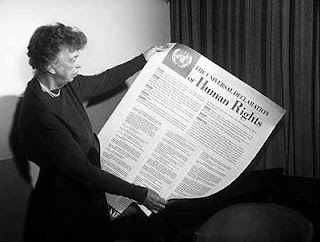
We can go on, in other words, behaving as not a single other contemporary democracy in the world behaves: witness what has just happened to the UN resolution to extend the 1948 UN statement about human rights to gay human beings. To say this is to say that there is something woven into the fiber of this nation, of the American people, that is, to say the least, tone-deaf to the question of human rights for gay citizens. And somehow the experiences of those of us who are gay and lesbian in the U.S, and which are often experiences of having rights violated and denied, aren’t being heard—not in a way that reaches the mainstream.

How can that be, I wonder? As I look at my own experiences—unique ones admittedly, in some respects—as an openly gay theologian, who has worked in church-related institutions in which my rights have been grossly violated, and who also has a long history of working in historically black church-related institutions—I see some keys that help unlock the mystery. For me, at least.

I have become aware in the past several days that one of the triggers for my anger at the Rick Warren choice has to do with his statement comparing gay folks to pedophiles. That statement sends me through the roof. That long-told lie—a lie that has long since been discredited—sends me through the roof.

And here’s why. As I think I’ve mentioned on this blog, at a teaching position at a Catholic university some years back, I met that lie in all its ugly force, when I was given a one-year terminal contract, and was denied a reason for the termination.

As I’ve noted, when I approached the chair of the faculty grievance committee to file a grievance requesting that I be given a reason for being terminated, the chair initially stonewalled me, asking, “Well, what if the reason was that you have molested a student?” I pointed out that I had not done so, and that had I done so, the college would have had a contractual basis for firing me, and would not need to play the shell game it was playing to disguise its real reasons (academic-freedom ones) for terminating me.

I never received a reason for the termination. I resigned in protest. Not long after this, I heard from a friend that he had met the son of the president of the faculty senate, who had been in one of my classes. He informed my friend that his father was proudly telling people I had been fired because the campus couldn’t have “that sort” around—the sort that might “put their arm around a student.”

This is to say, early in my career as a Catholic theologian, I met the lie that gay folks are pedophiles, and I saw how it is used to smear somebody, destroy his reputation, and provide a bogus justification for terminating him—in the absence of any scrap of evidence to back the lie.

Just because. Because gay folks are pedophiles. Never mind that this was one who had lived in a committed relationship for years, and who had never once even dreamed of crossing any lines of propriety with students or anyone else.

I wish I could say that this has been my sole encounter with that toxic lie. Unfortunately, it hasn’t been. This is part of my violent reaction to Rick Warren’s continued lying about gay human beings and our lies, in the name of Christ. I react as anyone unjustly lashed over and over rects: I react with a violent reaction against the violation of my personhood and my flesh. Which is all the more horrendous when the one doing it claims to speak for God.

Down the road, same script all over again in my professional life—showing me that the gays-pedophiles lie remains alive and well in our culture, and will remain alive as long as it is instrumentally useful for people to tell when they want to violate the rights of gay folks. For any reason at all. Useful for people of faith to tell when they want to violate the rights of gay folks and not be held accountable for doing so.

Here’s what happened in my last encounter with that ugly lie. As I have also noted on this blog, at a later point in my career, I lost another position at another church-owned university—this time an historically black one (HBCU). In this case, I was informed that the university wanted me gone and was offering to buy out my contract. I agreed to the severance arrangement. I was told, in writing, in a document I was not allowed to keep, that the reason for this offer was “inability to work with this administration.”

Then all hell broke loose. The university rescinded the severance offer, forcing me to seek legal counsel. My attorney told me I had a strong case: for fraud and inducement, violation of agreements made with me, damage of my career and livelihood, and defamation. At the same time, he warned me that, because this was happening in Florida, a state with no—absolutely none—legal protection for gay citizens, I should expect a very nasty battle. With mud-slinging.

In Florida, after all, employers can fire any employee at will for no reason at all. And as a hospital administrator informed a gay woman who asked to visit her dying partner in the hospital while I lived there, Florida is an anti-gay state with anti-gay laws. Good luck making a case that your rights have been violated in such a state. Good luck defending yourself against grossly obvious misrepresentations of your character and work in such a state.

Employers know that they can get away with murder in such states. And they do so. And those in faith-based institutions can be among the most gleeful reputation-destroyers and liars, especially when the person they are attacking is gay and has chosen to stand up for her or his rights.

So here’s what happened when I began to seek legal counsel: soon after that, suddenly, in my email—my home email—there pops up a message. It purports to be from an internet social networking group, and it asks me to make a statement about how I happened to know someone in that network. Someone to whom my page in the network was linked. A friend of my nieces and nephews, with whom they were raised.

At the time I got the message, I had forgotten I even had that social network account. This was before Facebook and MySpace had taken off. My nieces and nephews had all signed up for the network, and had sent me (and their parents) invitations to join.

I joined, as did my brother and his wife. Our pages were linked to those of the young folks in the family, which linked us in turn to their friends. And then those of us who were adults, and who knew little of this new technology and its importance to young people in establishing social contacts, forgot we even had these pages. We sent a message here and there to our nieces and nephews, and then never visited the site again.

That is, I forgot until I got the message asking me to explain how I happened to know the young man who was a friend of my nieces and nephews—a young man whom I knew well because he had spent many summers with my brother’s family, as a quasi-member of the family. A young man who had grown up with my brother’s family and was the best friend of my youngest nephew.

When I got that message out of the blue, I had a very good idea why I was getting it at just that time—right after I had sought legal counsel to deal with a church-related HBCU that had made a promise of severance pay to me, and had then violated that promise. I could not and cannot say that the message came from any particular person within the institution with which I was now in conflict.

What I could say with certainty, though, was that this was not the first time I had experienced these insinuations at that particular workplace. And I had experienced them right from the top, from a person I knew well at this institution.

Case in point: not long before the process of disempowering me began from that person at the top, my nephew came for a visit. My niece came a few weeks later. The nephew who visited was the youngest, the friend of the young man about whom the questions regarding my connections were being raised.

When my nephew visited, he was intently interested in a modeling career. He tends to go through phases—perhaps like any young person, except his are all-consuming, and then he drops that interest and goes on to another. He came with me to my office one day and asked if he could check his email while I worked.

I told him of course, but pointed out to him that the computer system belonged to the university and not to me, and to be aware that he should not log onto any site that would be problematic in the workplace—rules I also apply at home if he asks to use my computer. He agreed.

Later, I happened to see he had sent his modeling portfolio by email, saving it on the desktop of my computer. He was trying to arrange interviews in Florida. I was helping him with this. I knew about the portfolio, as did his parents. We had all helped him organize it. It was a typical professional portfolio of any young man applying for modeling jobs with agencies that supply clothes models.

When I saw the portfolio on my work desktop, I thought nothing about it and put it into my recycling bin. That is, I thought nothing about it until I came to work the next day and found that the portfolio had somehow found its way in the night out of recycling and back to the desktop.

This was hardly the first clue I had had that a careful monitoring system—no, I have to be honest: a spying system—was in place, vis-a-vis my office. I was under no illusions about the system when a request was made to have a camera installed in my office, to “protect the computer.” I knew, because I knew the person at the top in this university, that when this supervisor decided to do an employee in, it was routine for her to obtain copies of that employee’s email for years back, if necessary, and to go through them with a fine-toothed comb looking for evidence to justify her dismissal of the employee.

I had seen her use this method of supervision, in fact, with two other employees in the past who happened to be gay. To my shame, though I protested in each case and had my hands resoundingly slapped, I allowed myself to be convinced that the supervisor had some strong reason for taking action against those employees—reason that went well beyond sexual orientation. I allowed myself to be convinced of this, God help me, even when she spoke to me of one employee's probable liaisons with students, of which I had seen no evidence.

When that request to explain how I knew my family’s friend at the social networking site came through, I also remembered some incidents that had just taken place when my nephew visited. The university photographer had insisted on taking pictures of my nephew, Steve, and me at a university banquet on my birthday.

I had naively thought nothing at all of this. He was, after all, snapping pictures of various folks in attendance at the event. Once again, though, I had found those pictures mysteriously uploaded to my computer—at which point I realized an ugly game was being played, one that was insinuating I had some kind of relationship with my own nephew!

This is, unfortunately, the level at which many folks continue to think about gay people and our lives. It is the level to which many folks continue to stoop even when they know better, because they know that it works, when they want to attack someone is gay for other reasons: it works to insinuate these ugly things about gay people, particularly in cultures where the equation of homosexuality with pedophilia remains strong, and where gay people lack any legal protection if their rights are violated in the workplace, in housing, etc.

And it works—this has to be noted in the context of the Rick Warren discussion—precisely because many people of faith continue to indulge themselves in these lurid fantasies about gay human beings and gay lives. People of faith who should know better.

Part of the reason, I’m convinced, that many Americans just don’t get how anguished we feel when our rights are trampled on and when folks of the ilk of Rick Warren are given such prominence in the new administration, is that buried deep inside the minds and souls of many people in our society are still toxic lies about gay people and gay lives.

And religion in our society is responsible, to a great degree, for keeping those toxic lies alive. In some church-related cultures—I’ve met this in both Catholic circles and in the heavily evangelical context of HBCUs—it is still perfectly acceptable to equate being gay with being a pedophile. No eyebrows will be raised at that equation, in these circles. If one is gay and calls for proof—for accountability for the lie being told—one is likely to be informed that this is a religious issue and gay people, being the dirty pedophiles they are, are anti-religion.

Angry? Grieved? Disappointed? Betrayed? You bet we are. This behavior has to stop. It has to stop being promoted by any churches in this land, and any church institutions. And it has to stop being given top billing at any presidential inauguration in this land.

Until it does stop, we Americans might as well forfeit all claims to being interested in human rights. Until it stops, we should continue doing what we're doing now, continue opposing declarations of human rights that include gay human beings. It’s at least honest on our part to admit that we just don’t believe in the full gamut of human rights for gay citizens.

And that we use religion to justify that selective approach to human rights. And that, in the final analysis, is why Rick Warren's presence at the inauguration is obscene to some of us, and why it signals that a business as usual that gay citizens have found toxic for decades now is going to continue with the new administration and its preferential treatment of the religious right.

Human Rights Apply to All Peoples, Places, Times: The Human Rights Backdrop of the Rick Warren Selection

The Rick Warren choice is now becoming old news. In the instant-flash attention span of the American public and its media mavens, we’re now supposed to move on to something else.

And Christmas is just around the corner. The quintessential American family holiday, the day when we stop to celebrate—no matter who we are and what our religious background—the Christian ownership of this nation with the soul of a church, the centrality of family (mama, papa, children around the dinner table, bien entendu) to the very foundations of our society.

Just get over it. Move on. Smile, lift a glass, bask in Christmas warmth. It could be worse. Prepare to welcome into your living room the smiling face of a reverend who depicts you as a pedophile when the new president is inaugurated; keep practicing your kowtow to the claims of a hate movement disguised as religion, right at the beginning of a new administration in which you expected something new, something hopeful, to take place.

Don’t take offense at the message that you and yours are outside the scope of the hope. Crumbs feed, after all. They may not satiate hunger. They may outrage, when you mouth your dry bits as those who are whole human beings rather than 3/5 of a human eat the entire loaf of bread in your presence.

Be glad you have the crumbs. It could be worse.

I cannot promise that I will forever leave the Rick Warren topic behind now, as many other commentators are doing. When I feel strongly that important principles have been violated, it’s in my nature to keep fighting—as people who take me to be meek and pliant often discover to their surprise, particularly when they have counted on my being what a friend once called “their juicy little victim.”

And even if I slip into silence about the Rick Warren choice, I won’t be silent in my soul. I’ll keep mulling over the significance of an inexplicably callous political choice designed to humiliate many of us and to tell many more of us that we are outsiders to the dominant religious ethos of this nation with the soul of a church.

As I mull, I will continue keeping my ear to the ground for places in which an aging gay couple can live a more humane life than this nation as things now stand. Places in which religion as the purveyor or hate is not enshrined, given a place of honor, as continues to be the case in this country.

I mean it. I have had enough, and given the chance, I would uproot myself in a heartbeat, now that I have seen what the new president is capable of, at the very outset of his presidency.

Before I make some concluding comments, a few more statements of the past several days, to which I’d like to draw attention. I am very taken by Jeffrey Feldman’s argument that many Americans are tired of tinkerers, when it comes to civil rights issues. We are, I have proposed repeatedly, tired of liberal expediency in the area of human rights.

Rights are rights. To turn them into “issues” with which we need to tinker, and about which we should be permitted to temporize and talk to no effect until we have gained consensus, undermines all human rights of all groups, not merely the group of human beings in whose case we find it expedient to drag our feet. The group whom we ask to be content with the 3/5-of-a-person definition, while others around him and her are defined as fully human.

I think that Feldman is absolutely correct to view the Warren decision from the standpoint of civil rights, and to argue—as Bayard Rustin argued back in the 1980s—that gay rights are now the epicenter of the civil rights struggle in this country. An epicenter that we cannot ignore, any more than we ignored the rights of slaves or of women in the past, unless we want to undermine our democracy at a profound level. Here’s Feldman:

The [Warren] decision suggests that on civil rights issues, Barack Obama might be more of a tinkerer than a leader. . . .

Marriage equality for gays and lesbians is not just some "social issue" akin to school uniforms, warning labels on music or smoking in restaurants. It is the current epicenter of the civil rights movement in America.

That has not always been the case. When Lincoln took office, the abolition of slavery was the epicenter. When Wilson took office, the women's suffrage movement was the epicenter. When FDR took office, poverty was the epicenter. When Kennedy took office, segregation was the epicenter.

Thinking about Obama's presidency in terms of an 'epicenter' of civil rights changes how we think about Rick Warren speaking at the inauguration.

Translating Rick Warren into the terms of previous civil rights eras is the key to seeing why his role at Obama's inauguration is so troubling. By comparison, if this were Lincoln's inauguration, Rick Warren would have been the equivalent pro-slavery pastor giving the invocation. If this were Wilson's inauguration, Rick Warren would have been the equivalent of an anti-women's suffrage pastor saying a prayer. For FDR, he would have been the same as inviting a pastor opposed to rights for the poor. For Kennedy, he would have been the same as inviting a pastor who spoke out repeatedly about the dangers of desegregation.

In each of these cases, for the president-elect to invite the a voice known for arguing against progress -- and to do so in the name of political peacemaking, as Barack Obama has done with Rick Warren -- would have revealed a tinkerer on civil rights, not a leader (www.huffingtonpost.com/jeffrey-feldman/on-civil-rights-obama-mus_b_152092.html).

A tinkerer and not a leader: that is, in my view, a damning indictment of the president many of us worked hard to elect. I hope it turns out to be a misplaced judgment. I have reason to wonder, though—particularly when the Warren decision sets a context for his entire presidency, because it places this kinder-gentler member of the religious right (swampland for sale in Florida, if you believe that) front and center as the pastor of the new administration from its inception.

Andrew Sullivan also points to the centrality of civil rights, and questions of right and wrong that demand response and not tinkering or temporizing, in the Warren discussion:

Civil rights are not about left and right; they are about right and wrong. And the hurt that this choice has caused is not a function of an alienated base, it seems to me, so much as salt on the wound of Proposition 8. I understand why Obama did this. I just wonder if he understands how deeply hurtful it is to be asked to pray with someone who has compared my marriage with the sexual abuse of children, incest and polygamy. Yes, I am, in Warren's eyes, the equivalent of a pedophile, as is my husband. This comparison is what Warren calls his commitment to "model civility."

Some model, some civility (http://andrewsullivan.theatlantic.com/the_daily_dish/2008/12/rick-warren-pra.html).

And Paul Jenkins is angry—justifiably angry. Angry enough to encourage gay citizens to boycott the inauguration. As he notes, the gratuitousness of this decision is what sticks in the throat. Obama is, as Jenkins says, at the top of the world. He has nothing at all to gain from kissing up to the religious right and much to lose, among those who hoped for an entirely new tenor to our political life now that Obama has been elected:

Barack Obama's choice of Rick Warren to give the invocation at his inauguration is dreadful. His explanation is, if possible, even worse. He shrinks Warren's grotesque comparisons down to a "disagreement," as if we were talking about ethanol subsidies. But we are not. In fact, we are not even talking about marriage rights, we are talking about demonizing an entire group of Americans for the purpose of religious indoctrination, political gain and finance. . . .

The small, short-term advantage he gets from associating so closely with a hate-mongerer gives us a pretty good idea of where gay people stand in the president-elect's moral and political calculations. It wasn't always so of course, as I recall at least one fundraising event at the home of a gay couple where Obama raked in hundreds of thousands of dollars at one of the roughest moments of his campaign. There were also the millions of hours of volunteer work put in by gay people all over the country, and endless donations and endorsements. . . .

And let us start by walking away from an inauguration at which we will have to sit (or stand a mile away) and watch the man we put so much hope into betray us so deeply in the first seconds of his presidency (www.huffingtonpost.com/paul-jenkins/mr-obama-disagrees_b_152382.html).

Calls to boycott the inauguration. From folks who gave much and worked hard for the election of the man being inaugurated. One wonders what Obama thought he would gain by stepping on us in this way—needlessly, at the start of his administration, when he could so easily have chosen a pastor with no history of hateful speech and action regarding gay human beings; when he need not have alienated and disappointed some of his strongest supporters both in the gay community and the progressive wings of the Democratic party.

One wonders if the decision is merely ham-fisted, the decision of someone who truly does not understand (or seek to understand) the depth of pain he is inflicting, on the heels of the painful proposition 8 victory. The decision of an evangelical Christian who, in his heart of hearts, does not see gay human beings as fully human (3/5 of a person), who imagines that he can talk about human rights while allying with those who trample on the human rights of gay persons, without being taken to task for inconsistency. Since we all know that gay persons do not have the legitimate claim on the conscience of bona fide minority groups whose human rights are real and not special rights . . . .

Or is the decision cynical political calculation, a decision premised on the certainty that the gays won’t jump ship, since they have no place else to go: crumbs or nothing at all.?Is this a venal opportunistic attempt to play to the broad base of evangelical voters who, for the first time in decades, are well-disposed to the Democratic party, but not at all willing to accord rights to gay citizens?

Whatever the motivation of this senseless act of gratuitous cruelty to a group of citizens already smarting from recent political events, it is an act now producing strong disaffection of some of the new president’s staunchest supporters, right as he begins his term of office. Where Paul Jenkins talks about boycotting the inauguration, Pulitzer-prize winning novelist Jane Smiley notes the lavish donations she gave to the Obama campaign and the countless hours she spent working for Obama’s election.

She doesn’t intend to give any more. Not until it becomes clear whether the new president values those who have buttered his bread, or Rick Warren:

Rick Warren gets a free ride, tax-wise, from me, because his political action committee is disguised as a "church". That's bad enough, and I plan to work hard to take away his free ride, but what's worse is that Joe Biden is asking me again and again for a donation so that he and Barack Obama can give Rick Warren, hate-monger, a platform. Joe, I've watched the transition and I've held my tongue and given you guys a chance to show your true colors. But don't ask me for any more money until you figure out that Rick Warren hasn't been buttering your bread. People like me have been doing that, and we are getting a little ticked off (www.huffingtonpost.com/jane-smiley/joe-biden-asked-me-for-mo_b_152237.html).

I have an e-friend, an ordained minister, who has followed Smiley's line of protest. She has sent the Obama folks a letter asking for her donations throughout the campaign to be refunded. Her letter notes that she doesn't know how to estimate the monetary value of the many hours she spent working for Obama's election. If she could do that, she'd ask for reimbursement for her labor, too.

And as we prepare to listen to Rev. Warren address the Almighty on our behalf on inauguration day (well, those of us who will still be listening and watching), this news just in: www.huffingtonpost.com/2008/12/19/united-nations-first-gay-_n_152325.html. When France presented a petition to the United Nations this week that would extend the UN definition of human rights to gay human beings, the United States refused to endorse the petition.

We sided with the Arab nations that criminalize homosexuality, making it a capital crime. And with the Vatican, which is fighting hard against this human rights initiative even though it was presented to the UN by an historically Catholic nation, though it was read to the UN by the representative of another Catholic country, Argentina, and though it was endorsed by all member nations of the European Union, as well as by our allies, Japan and Australia.

We stand proudly apart. America, the exception, the nation with the soul of a church. The evangelical nation where one may hate freely in the name of God, and still remain in the mainstream. We stand with the countries that execute gay human beings.

As the Dutch foreign affairs minister, Maxime Verhagen, notes re: this UN resolution, human rights are human rights are human rights. You can only support curbing the human rights of any group if you assume that that group is not fully human, not human as you are human:

The Dutch foreign affairs minister, Maxime Verhagen, said countries that endorsed that 1948 document had no right to carve out exceptions based on religion or culture that allowed discrimination against gays.

"Human rights apply to all people in all places at all times," he said. "I will not accept any excuse."

That’s how the European Union sees this epicentric human rights issue of our time, despite the exercised reaction of the gentlemen at the top of the Catholic church. We Americans don’t see it that way.

To our shame. And it was to eradicate that shame—shame at the inconsistent, deplorably weak stance on human rights of recent U.S. administrations—that many of us worked hard to elect the new president. Who has invited a pastor to give his inauguration invocation, who clearly stands with our current leaders and against the human rights of gay persons, against the growing consensus of most other Christian nations around the world, re: gay rights.

We elected Obama to lead us in a different election. To lead us. Now, given his invitation to Rick Warren, we’re left wondering: where does he stand on this UN human rights initiative, and regarding the rights of gay human beings?

God help me, I’m not so sure now.

Friday, December 19, 2008

Praying the Gay Away: More on Pastor Warren

A friend came by yesterday. We hadn’t seen him in some time. We knew from calls and emails that he had recently discovered his former partner of about 20 years had died. A year ago. His ex-partner’s family did not contact him.

These friends had a volatile relationship. Both had done the right thing and married—women—and had children, knowing even when they married that they were gay. In the case of the friend who has died, his family exerted tremendous pressure on his life and relationship. Both of his parents are ministers in an evangelical church.

To say that they couldn’t or wouldn’t accept a gay son is an understatement. They did all they could to wish the gay away. Not just pray it away: actively pretend that it was not there, in the form of a son who had married and had children. And had chosen the ministry for his own career.

Our friend's family was good at praying things away and pretending they weren't there. That's what faith is all about, after all, isn't it? When our friend's father once found one of his daughters in bed with a black man, he denounced her from the pulpit the following Sunday (yes, the race of her partner in fornication trumped even the fornication). He did so after having beaten her black and blue with the buckle end of a belt, so that she has scars to this day from the beating.

Because the family was large and preachers' children are supposed to be model children, before church every Sunday, our friend's mother lined up all of her children and dosed then with Valium, so that they'd behave well in church. Most of them now have serious addiction issues.

When our friend came out to his parents, his father insisted that he sit at the kitchen table with his parents and answer explicit questions about what he and his new love did in bed. His father's solution for his "problem" was simple: surgery. Gay men are "that way" because they have a clitoris embedded in their throats. Have the offending organ removed, and you will long to return to your wife. To the world of normal heterosexual Christian marriage.

I don’t know all the details of the break-up of these friends’ relationship. I do know that struggling with AIDS, and without jobs, which they could not hold as people living with AIDS, made their live together difficult. The friend who visited yesterday has had numerous health problems, including difficulty getting dental work done when local dentists won’t touch an HIV+ patient. We have helped him obtain dental services in a city three hours away.

When he visited yesterday, my friend showed me the funeral program of his former partner. He discovered the partner’s death in a round-about way, by calling the partner’s sister to ask if she had any news of her brother. When he called, she broke down and said, “I don’t know how to tell you this. He died a year ago. We decided not to let you know.”

When the former partner left, he broke ties with all of us—explicitly and cuttingly. (His final words to us: "You can reach me at ivehadenough.com.) We have now learned that in the several years up to his death, he remarried his former wife, though the remarriage met the same fate the marriage met on its first go-round.

He returned to church, got the demon of homosexuality expelled from his body, and had the cancer from which he was suffering due to AIDS healed. Or so he thought, until it came back with a vengeance and proved terminal. By the time he died, it had metastasized from his lungs to his brain. We now wonder if some of his aberrant behavior in the period leading up to his break with all of us was due to the encroachment of the cancer on the brain.

The funeral program is astonishing. It speaks about a man none of us ever knew. He was the devoted son of Bro. and Sis. H., the faithful husband of So and So, the proud father and grandfather of this and that child and grandchild.

He was a minister in the church. He died of cancer.

The program totally erases the last 20 years of our friend’s adult life. Gone. Never happened. Vanished. Out of sight. Out of mind.

Because this is what the churches, many of them, and the people in the churches, want for us who are gay: gone; never happened; out of sight and mind. Our presence creates confusion. It causes problems. It makes folks uncomfortable. They have to think about what they’d rather not think about—e.g., about mutable gender roles and how society and church allocate power to males and females on an arbitrary basis.

Erasing us is easier. Pretending is simpler. If we ourselves would only participate in the pretense and welcome being erased, how much happier churches would be. And how much healthier our society would be.

Devoted son of Bro. and Sis. H. Faithful husband. Proud father. Who needs more than that, really? Why isn’t it enough to play the roles that God has established for us all—the ones that have obtained since creation began? The ones that make everyone else comfortable in their God-ordained roles?

Astonishingly, churches and church people seem never to grasp that erasing people and asking them to pretend is immoral. That it violates the most basic canons of human decency. That it fosters lies, and lying is antithetical to the moral life.

Looking at my friend’s funeral program, I could not help thinking of Pastor Rick Warren. All that Rick Warren stands for is captured in this “Christian” funeral program that denies the humanity—denies the existence—of a gay son, father, citizen. This is, at its core, what churches’ assault on gay humanity is all about: many churches and many folks in churches want to act as if we do not exist. They want us not to exist. They want to pray us away, to pray away the gay.

If we did exist, and if we who are gay and lesbian, and those who love us, were in the audience to any discernible degree on inauguration day, having Rick Warren on stage praying would be obscene. His very presence at the inauguration would point to ugly unhealed divisions in a land in which a new president speaks of himself as healer. His presence at the inauguration would highlight the fact that these ugly unhealed divisions are due to injustice—yes, injustice supported by twisted reading of the bible, to which everyone who reads the bible has a right. But injustice nonetheless: injustice that goes beyond religious boundaries and drives to the heart of our pluralistic, democratic society.

A society in which twisted and hateful readings of the bible have not been allowed to determine how we treat other marginalized groups of humans—slaves, women, immigrants, the poor, people of color. A society in which we have recognized peoples’ right to read the bible any way they wish, but in which we have insisted on the necessity of fundamental canons of human decency, above and beyond that handful of carefully chosen biblical verses that opponents of justice and decency always light on.

The presence of Rev. Rick Warren on the stage at Obama’s inauguration will point to ugly unhealed divisions in our society. It will also point to our unwillingness to heal those divisions at this point in our history—to accord justice where justice is lacking—because we continue to permit haters who abuse the bible in support of homophobia to do what we do not permit haters who abuse the bible in support of oppression of women and people of color to do: not only to claim religious sanction for views that are antithetical to our democratic society, but also to claim the right to impose those views on the entire society.

Rick Warren’s presence at the Obama inauguration will “work.” It will work because gay and lesbian people will be invisible at this event—except insofar as we blend into the big picture of devoted sons and daughters, faithful husbands and wives, proud fathers and mothers of children and grandchildren.

There is simply no other picture available to us today, in this nation with the soul of a church. To the extent that we do not like what our snapshots show us, we can always doctor them—we do always doctor them—to make them “right.”

Even if that means printing funeral programs that erase the lives of our sons and daughters.

Obama and Lincoln: Rick Warren and the Price of Leadership

As the Civil War approached, a majority of Americans believed that the scriptures support slavery. The abolitionist movement represented a minority of Christians—a prophetic minority who read the scriptures to support the equality of all human beings in the eyes of God. This prophetic minority challenged the presuppositions of the majority of American Christians who pointed out that Christianity had historically always approved of slavery, because the bible endorses slavery. Slavery represented the ancient practice of Christians for centuries, taken for granted as both “natural” and biblically mandated.

As the Civil War neared, many Americans began to change their mind about the practice of slavery, not primarily because of religious opposition to the practice, but because of political and economic objections to the extension of this practice westward across the continent. The alliance of the prophetic minority of people of faith opposing slavery and the majority of those who opposed the institution on pragmatic grounds led to a war to end this practice.

For the prophetic minority of abolitionist Christians who opposed what had been the longstanding dominant interpretation of the bible in support of slavery, and who challenged the cultural assumption that the bible was in favor of slavery, it was essential that churches and the culture at large begin reading the bible in a new way. This way of reading scripture would depart from literal readings that inevitably supported slavery, since the institution was taken for granted and endorsed by the bible.

This way of reading scripture would call for people of faith to recognize that the weight of scripture, beyond verses here and there taken literally, was on the side of a love that regarded all people as equal in the eyes of God, and that could not be harmonized with the subjugation of other human beings into slavery. This reading of the bible contested both the longstanding literal reading of the scripture, which easily lent support to slavery, and the assumption of the majority of Americans that, because the bible upholds slavery and because it had been practiced for millennia around the world, slavery was a morally acceptable practice.

Today, a large number of Americans, including American people of faith, believe that the bible is clear in condemning homosexuality. This widely held cultural and religious consensus argues that Christians and other religious groups have always condemned homosexuality, and that what has always been widely held and appears to enjoy biblical support should continue to obtain in our land.

A prophetic minority of people of faith departs from this longstanding reading of the scriptures and the cultural consensus that reading reflects. This prophetic minority sees the weight of scripture as endorsing love rather than hate, as respecting the worth of every individual in the eyes of God, regardless of the innate sexual orientation of the individual.

This minority of people of faith is increasingly supported by many people in the culture at large who, for philosophical and other reasons, have come to regard oppression of gay human beings as morally insupportable. For many of us today, we are at a tipping point in our culture and religious development precisely parallel to that facing Americans of the 1860s.

Just as slavery presented Americans and American churches with hard choices about where truth and right and wrong lie—and how either to go on living with slavery or to abolish it once and for all—the battle over human rights for gay and lesbian persons presents Americans and American churches with the same challenge today.

At the tipping point of the 1860s, a presidential leader came on the scene who refused to compromise or to engage in pragmatic games regarding slavery. Abraham Lincoln decided that, once and for all, the nation must do what is right and abolish slavery.

As he came to power, an influential Southern religious leader, Rev. James H. Thornwell, composed a statement on the churches, the bible, and slavery. Rev. Thornwell wrote the following words in defense of slavery in 1861. They were then adopted by the General Assembly of the Presbyterian Church in the Confederate States of America as the Presbyterian communion, like several other major American churches, divided over the issue of slavery:

We [supporters of slavery] stand exactly where the Church of God has always stood—from Abraham to Moses, from Moses to Christ, from Christ to the Reformers, and from the Reformers to ourselves. We stand upon the foundation of the Prophets and Apostles, Jesus Christ Himself being the Chief corner stone. Shall we be excluded from the fellowship of our brethren in other lands, because we dare not depart from the charter of our faith? Shall we be branded with the stigma of reproach, because we cannot consent to corrupt the word of God to suit the intuitions of an infidel philosophy? Shall our names be cast out as evil, and the finger of scorn pointed at us, because we utterly refuse to break our communion with Abraham, Isaac and Jacob, with Moses, David and Isaiah, with Apostles, Prophets and Martyrs, with all the noble army of confessors who have gone to glory from slave-holding countries and from a slave-holding Church, and without ever having dreamed that they were living in mortal sin, by conniving at slavery in the midst of them? If so we shall take consolation in the cheering consciousness that the Master has accepted us (“Address on Slavery,” in The Role of Religion in American Life: An Interpretive Historical Anthology, ed., Robert R. Mathisen [Lanham, MD: University Press of America, Inc., 1982], p. 106.

Rev. James H. Thornwell read the bible re: slavery in 1861 precisely as Rev. Rick Warren reads the bible re: gay human beings today. As did Rev. Thornwell, Rev. Warren claims to “stand exactly where the Church of God has always stood.” As Rev. Thornwell did in 1861, Rev. Rick Warren points today to the “noble army of confessors” who have “gone to glory” from Christian cultures condemning gay people over the centuries.

In defending his choice of Rev. Rick Warren to deliver the invocation at his inauguration, Barack Obama states, “. . . [D]ialogue I think is part of what my campaign's been all about, that we're not going to agree on every single issue, but what we have to do is to be able to create an atmosphere where we can disagree without being disagreeable, and then focus on those things that we hold in common as Americans."

Question: Does disagreeing without being disagreeable permit us to dispense from making moral and political judgments about right and wrong when principles of human rights are at stake?

Question: Should Abraham Lincoln have invited Rev. James H. Thornwell to give the invocation at his inauguration? You know, to build consensus and draw together those with differing ideas and various ways of interpreting scripture? To heal the nation and keep it united?

The image is from the Atlantic website, Sept. 1999 (www.theatlantic.com/issues/99sep/9909lincoln.htm).